
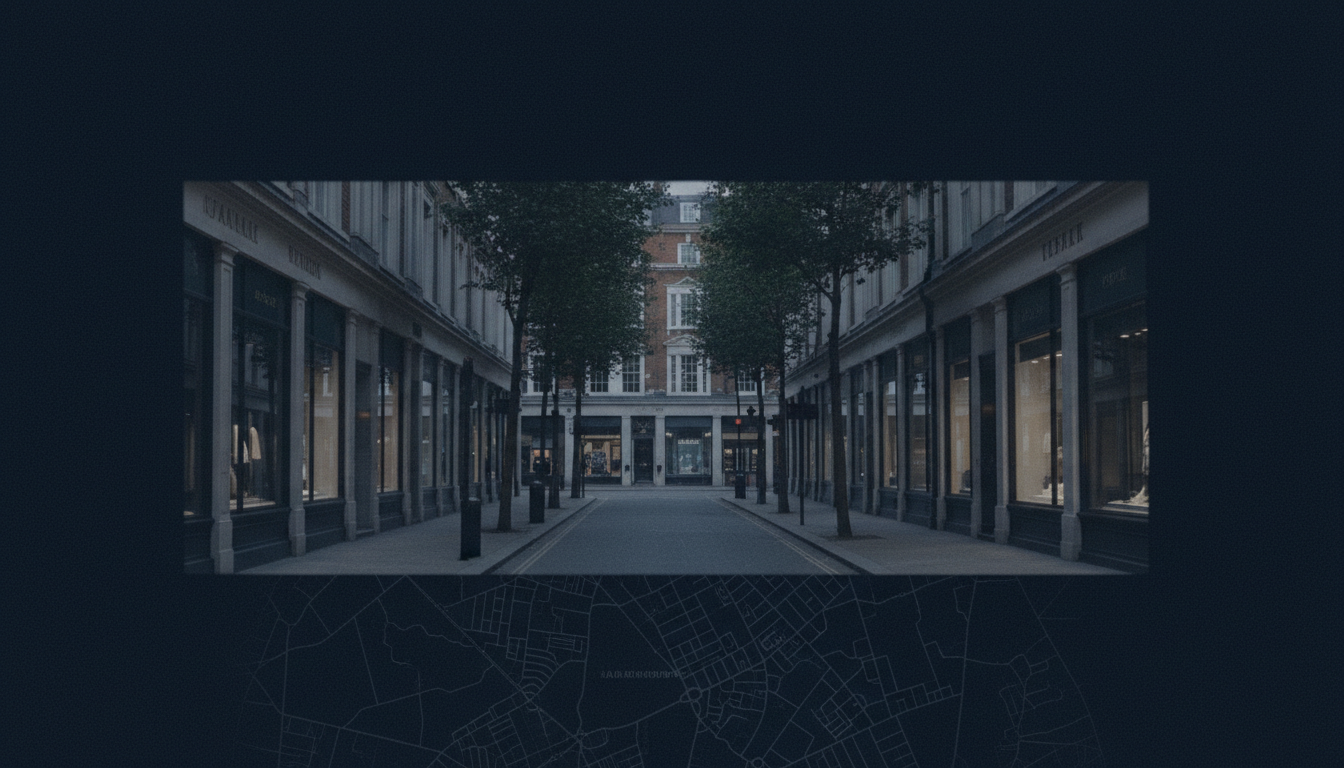

Albemarle Street
Mayfair
In the heart of Mayfair, Albemarle Street sits along a premium retail spine where compact blocks concentrate a high-value, fashion- and service-led premium environment. The street benefits from proximity to flagship brands and refined dining, creating a walkable circuit that draws local professionals and international visitors who combine shopping with a scheduled service or cultural outing. This street sits within the wider commercial landscape covered in Mayfair & Soho W1S Retail Market Overview and Investment Insights. Its surrounding area reinforces a quiet, curated tone, with strong pedestrian links to Green Park and other central London points, helping maintain consistent foot traffic across the day and into the evening.
For someone evaluating Albemarle Street as a place to open or run a business, the practical questions orbit around floor space, space planning and the terms that help a brand fit into a premium environment while managing costs and exposure. The surrounding area supports a mix of businesses—from luxury services to gastronomy—that sustains steady foot traffic and cross‑shopping opportunities. Landlords often look for well‑defined concepts and flexible terms, while investors track rental yields and tenant demand as indicators of resilience in a high‑value corridor.
Demographic
Customer profile
Albemarle Street attracts a refined mix of visitors drawn to luxury shopping and high-quality service. The street’s compact scale and proximity to Mayfair’s flagship brands create a walkable circuit of boutiques, cafés and discreet services that draw both local professionals and international shoppers. Foot traffic is steady across the day as people move between stores, appointments and late‑night dining in the surrounding area.
Age and income
The demographic across this street tends toward mature professionals and cosmopolitan visitors with high disposable income. The surrounding Mayfair environment supports spending power typical of premium retail districts, with customers seeking quality experiences and personal service rather than volume-based shopping.
Purpose of visits
People come to browse luxury fashion, jewellery and beauty services, then linger for a coffee or light bite. The street sits within a broader Mayfair circuit that often pairs shopping with gallery- or culture-backed trips and refined dining, so visitors frequently combine a retail mission with a cultural or social outing. The flow of shoppers is reinforced by anchor stores and the premium service tone of the area.
Temporal patterns
Weekday daytime hours sustain a steady stream of foot traffic as professionals browse between meetings, while evenings see a shift toward dining and experiential retail. Weekends attract international visitors and leisure shoppers who extend time on the street, reinforcing longer dwell times and cross‑shopping opportunities.
Local versus travel demand
Demand from local residents and nearby professionals sits alongside travel demand from international visitors exploring central London. The premium positioning of Albemarle Street helps balance regular local foot traffic with visitors drawn to the Mayfair luxury cluster, contributing to a resilient occupier mix.
Implications for businesses
The occupier mix tends to favour small, high‑quality spaces that can host experiential concepts or flagship‑adjacent concepts. The combination of flagship brands and service‑led tenants supports stable foot traffic and stronger conversion at adjacent shops. Tenant demand remains oriented toward flexible, well‑curated spaces that can adapt to changing luxury consumer preferences.
An emerging trend
A rising trend is the testing of experiential luxury micro‑tenants and short‑lease formats driven by premium positioning and pedestrianisation nearby. Operators are increasingly experimenting with pop‑ups, concept stores and tightly curated micro‑spaces that deliver immersive experiences while allowing rapid turnover and brand testing in a high‑value corridor.
Description
Commercial character
Albemarle Street sits at the heart of Mayfair’s luxury retail spine within City of Westminster. The street has a distinctly premium character, with flagship stores, luxury service operators and refined eateries knitting together to form a concentrated, high‑quality retail environment. The surrounding area reinforces a quiet, carefully curated shopping experience that relies on consistent foot traffic and brand cues from nearby flagship brands.
Transport and accessibility
- Green Park Underground Station (Jubilee, Piccadilly, Victoria) – 170 m / 2 min walk
- Piccadilly Circus Underground Station (Bakerloo) – 549 m / 7 min walk
- Bond Street Elizabeth Line – 786 m / 10 min walk
Key local anchors
Anchor flagship stores anchor the street’s prestige—names in the luxury sector that draw high‑value foot traffic and reinforce Albemarle Street’s status as a premium destination. The concentration of these anchors elevates the street’s profile and supports cross‑selling across adjacent retailers and services.
Mix of businesses
The street supports a mix of shops, jewellery houses, high‑end fashion, gastronomy and beauty services. The premium environment encourages curated service formats, while the street’s compact footprint and close clustering of operators support efficient, collaborative trading patterns across the block.
Trading patterns
Trading rhythms on Albemarle Street align with a luxury consumer cadence: daytime browsing gives way to evening dining and after‑work social activities. The proximity to Mayfair institutions and galleries keeps shops working on a continuous, but nuanced, cycle that rewards well‑curated concepts with repeat visits and longer dwell times.
Flexible and small units
Small, flexible units thrive here, enabling luxury brands and experiential retailers to test formats with shorter commitments. This flexibility helps landlords retain high‑value tenants while allowing occupiers to adjust concepts as trends shift, maintaining the street’s premium energy without over‑stating risk in any single space.
Rental market conditions
Market conditions reflect scarcity of prime street space in a globally recognised luxury corridor. Tenants seek high‑quality units with professional property management, and landlords favour tenants with clear brand fit and short, well‑defined activity plans. The demand mix remains skewed toward premium brands, with rental dynamics supporting stable, long‑term presence for strong anchors.
A shifting pattern
The same strategic dynamic described above is evident in the broader market: operators are leaning toward shorter leases and flexible terms to respond quickly to shifts in consumer preferences while preserving the street’s luxury integrity. This pattern reflects a collaborative balance between premium positioning and adaptable formats, essential for sustaining momentum in a high‑value part of central London.
Anchor Name (retail, 39 m) – Major flagship retail store draws high-spend visitors and anchors the street’s luxury cluster, generating foot traffic for Albemarle Street.
Cartier (retail, 53 m) – Major flagship retail store helps sustain peak foot traffic and enhances the luxury storytelling along the street.
Prada (retail, 80 m) – Major flagship retail store anchors a corner of Albemarle Street and contributes to cross‑shopping within the luxury circuit.
Tiffany & Company (retail, 93 m) – Major flagship retail store strengthens the street’s appeal to high‑end shoppers, boosting overall foot traffic.
Chanel (retail, 99 m) – Major flagship retail store reinforces the street’s reputation for premium branding and exclusive experiences.
Bulgari (retail, 176 m) – Major flagship retail store anchors a luxury cluster and sustains consistent foot traffic from connoisseurs of fine jewellery.
Fortnum & Mason (retail, 223 m) – Major flagship retail store adds a premium food and gift dimension, attracting a diverse mix of shoppers and passers‑by.
Dior (retail, 248 m) – Major flagship retail store enhances Albemarle Street’s luxury narrative and draws discerning visitors.
Louis Vuitton (retail, 278 m) – Major flagship retail store contributes to the street’s premium magnetism and supports continued high foot traffic.
Burberry (retail, 279 m) – Major flagship retail store anchors the fashion anchor cluster and sustains a high‑quality trade environment for nearby tenants.
Trading patterns
The street’s trading pattern benefits from the density of luxury brands, which sustains value through cross‑shopping and brand‑led foot traffic. The concentration of premium retailers supports a virtuous circle of brand visibility, customer reach and time spent on Albemarle Street, with a premium service narrative reinforcing shopper loyalty.
Flexible and small units
Flexible units and compact spaces remain a practical fit for newer brands testing premium concepts or pop‑ups. The corridor’s prestige allows operators to justify higher rents for shorter terms if the concept can deliver a distinctive, memorable experience that complements the flagship anchors.
Rental market conditions
In this premium market, availability tends to be limited and tenure terms skew toward longer commitments for successful luxury operators. Tenant demand focuses on well‑defined concepts with strong brand alignment and a track record of delivering elevated customer service, while landlords prefer tenants who can sustain the street’s upscale image.
A shifting pattern
The prominence of experiential formats and flexible leases mirrors a broader investment outlook: investors value capital growth in premier lanes with robust rental yields, stable tenant demand and a clear path to enduring brand presence. Albemarle Street exemplifies how premium positioning can support adaptable, sustainable footprints for both tenants and landlords.
What This Means for Businesses
Albemarle Street operates as a focused luxury corridor in Mayfair, City of Westminster, where steady foot traffic is drawn by flagship brands and refined services. For a new shop, restaurant or studio, the environment rewards well-curated concepts that offer elevated service and a clear brand story, with cross-shopping opportunities across nearby stores and galleries. The street’s compact footprint and emphasis on high-quality spaces support flexible, experiential formats and short‑term tests, while longer commitments remain attractive for operators with a durable premium narrative. Accessibility from Green Park, Piccadilly Circus and Bond Street makes it easy for local professionals and international visitors to combine shopping with dining and culture, sustaining demand even as trends shift. If market conditions support it, exploring available units here could align with an upscale, confidence-rich investment outlook and stable rental yields—worth enquiring about current availability.